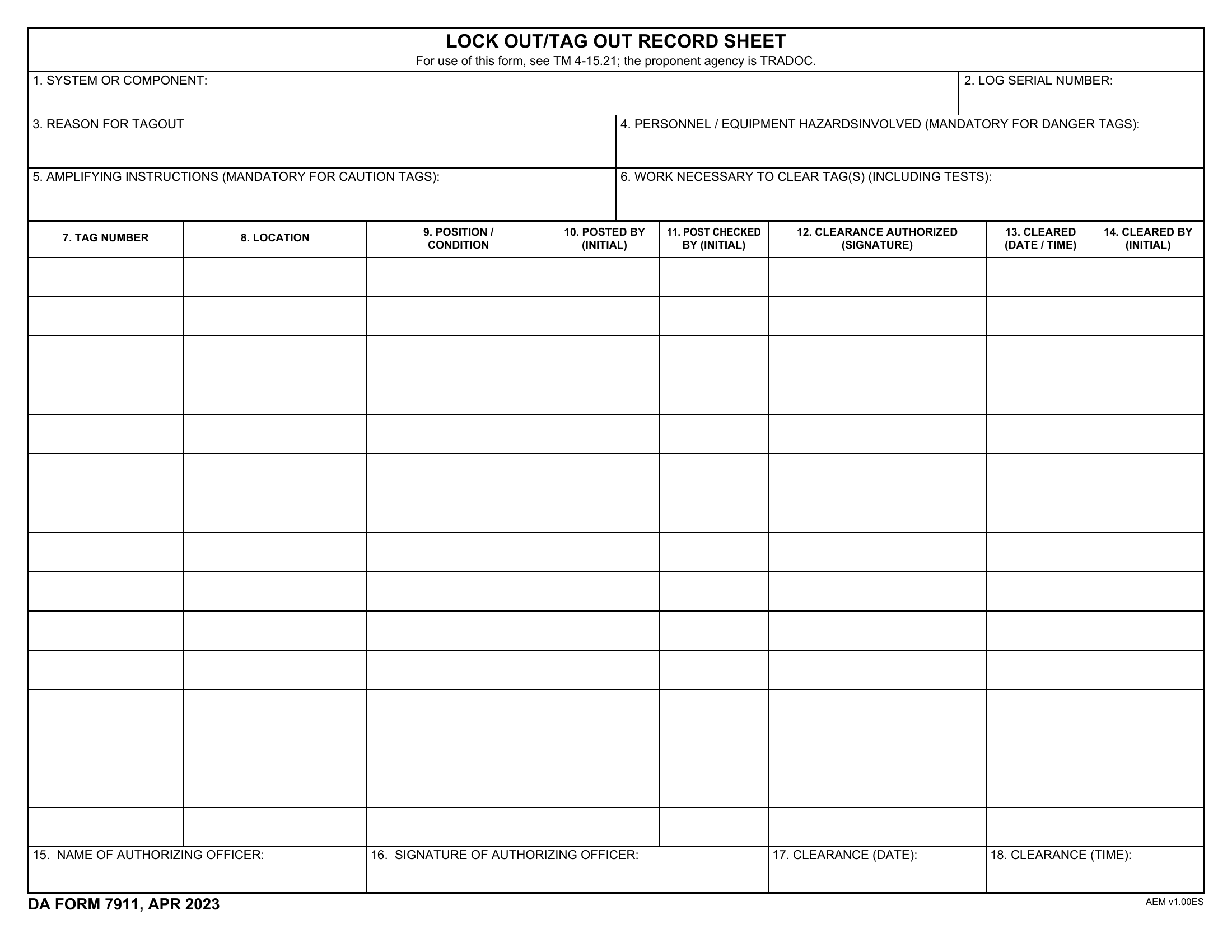
Every year, hundreds of workers are injured or killed during equipment maintenance due to unexpected energization. A single missed isolation step can turn routine servicing into a life-altering event. At the heart of preventing these tragedies is a simple but powerful document: the tag out record sheet. It’s not just paperwork—it’s a legal and operational safeguard that ensures machines stay de-energized, accountability is clear, and safety protocols are followed to the letter.
This document tracks every step of the lockout/tagout (LOTO) process, making it one of the most critical tools in industrial safety. Yet, many organizations treat it as a compliance formality rather than a functional control. When used correctly, a tag out record sheet becomes a living record of safety—preventing accidents, supporting audits, and creating a culture of responsibility.
Let’s break down its real-world function, structure, and best practices for implementation.
Understanding the Tag Out Record Sheet
A tag out record sheet is a formal log used during lockout/tagout procedures to document the isolation of energy sources on machinery or equipment. While “lockout” refers to physically securing energy-isolating devices (like circuit breakers or valves), “tagout” involves placing warning tags on those devices to indicate that equipment is not to be operated.
The record sheet goes beyond the tag. It logs who applied the lock/tag, when, why, what energy sources were isolated, and verification steps. Unlike a simple tag, this sheet creates a traceable, auditable trail.
It’s often used in high-risk environments including manufacturing plants, power generation, chemical processing, and HVAC maintenance. OSHA standard 29 CFR 1910.147 mandates effective energy control programs, and the tag out record sheet is a core component.
Key Components of an Effective Tag Out Record Sheet
A poorly designed or incomplete form defeats its purpose. To be effective, a tag out record sheet must include these essential fields:
1. Equipment Identification Clearly state the machine name, ID number, location, and process line. Vague descriptions like “pump in Room 3” can lead to confusion during shift changes.
Example: “Centrifugal Pump #4, East Processing Line, Station 2B – Deionized Water Transfer”
2. Authorized Employee Information Name, ID, department, and signature of the person initiating the lockout/tagout. This establishes accountability.
3. Date and Time of Application Precise timestamps for when the lock/tag was applied. This is crucial for tracking duration and ensuring tags aren’t left indefinitely.
4. Energy Sources Isolated List all forms of energy controlled: electrical, hydraulic, pneumatic, mechanical, thermal, chemical. Specify exact isolation points (e.g., “Main 480V Disconnect – Panel A2”).
5. Tag Number and Lock Number Unique identifiers help cross-reference physical tags and locks with the record. Enables tracking during multi-person or complex LOTO procedures.
6. Reason for Lockout Brief description of the maintenance task (e.g., “Motor bearing replacement” or “Conveyor belt realignment”).
7. Verification of Isolation A signed affirmation that zero energy state was confirmed using test instruments or safe procedures (e.g., “Tested with voltage detector – no potential found”).
8. Clearance and Removal Details Who removed the lock/tag, when, and confirmation that the area was cleared of tools and personnel.
A well-structured tag out record sheet turns procedural steps into documented proof—something inspectors, auditors, and fellow workers can trust.
Common Mistakes That Undermine Tag Out Record Sheets

Even organizations with LOTO programs make critical errors. These mistakes don’t just risk non-compliance—they invite accidents.
❌ Incomplete Entries Leaving fields blank—especially isolation points or verification steps—creates dangerous assumptions. If a new shift worker sees a tag without knowing what energy sources are blocked, they may assume safety that doesn’t exist.
❌ Use of Generic Tags Tags like “Do Not Operate – Under Maintenance” without reference to a record sheet or specific task lack context. Pair every tag with a completed record.
❌ Failure to Communicate Across Shifts Night crews may unknowingly remove locks if the record isn’t visible or handed over. Use shift交接 logs or digital systems to maintain continuity.
❌ No Verification Step Signing off on isolation without testing is a fatal flaw. The record sheet must include proof of zero energy state—not just intention.
❌ Allowing “Group Lockout” Without Proper Coordination In team maintenance, each worker must apply their own lock. The record sheet should list all participants and confirm each has removed their lock before re-energizing.
These aren’t theoretical risks. OSHA has cited companies for incidents where incomplete records contributed to electrocutions and amputations.
Digital vs. Paper-Based Tag Out Record Sheets
While paper forms are still common, digital solutions are gaining ground—especially in large or high-turnover facilities.
| Feature | Paper-Based | Digital System |
|---|---|---|
| Accessibility | Limited to physical location | Cloud-based, accessible via tablet or phone |
| Real-time updates | None – delays in communication | Instant notifications across teams |
| Audit trail | Manual, prone to loss or damage | Automatic timestamping and user tracking |
| Integration | Standalone | Can link to CMMS, ERP, or safety software |
| Error prevention | Relies on user diligence | Mandatory fields, validation checks |
Digital systems reduce human error and improve visibility. For example, a maintenance supervisor can instantly see which machines are tagged out plant-wide, preventing unauthorized restarts.
But digital isn’t always better. In remote or hazardous zones with poor connectivity, paper remains reliable. The key is consistency—whatever format you use, it must be standardized, enforced, and archived.
Top 5 Tag Out Record Sheet Solutions and Tools
While many companies create custom forms, pre-built solutions offer structure, compliance alignment, and scalability. Here are five trusted options:
1. EHS Insight – Lockout/Tagout Module Cloud-based safety platform with customizable tag out record templates, digital signatures, and audit reporting. Integrates with incident tracking and training modules.
- Best for: Mid to large enterprises needing full EHS integration
- Pros: Real-time dashboards, mobile access, OSHA-ready reports
- Cons: Higher cost, requires training
2. SafetyCulture (iAuditor) Mobile app allowing workers to complete tag out records on tablets or phones. Includes photo evidence, barcode scanning, and auto-generated PDFs.
- Best for: Field teams and multi-site operations
- Pros: Offline mode, intuitive interface, rapid deployment
- Cons: Subscription model, limited workflow automation
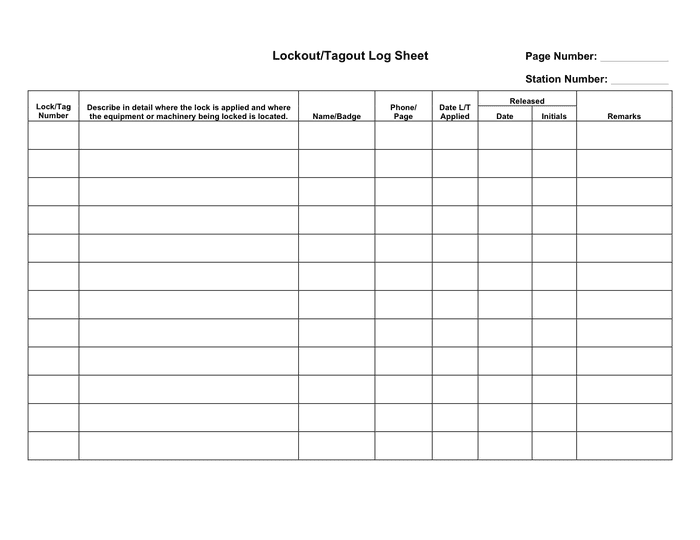
3. LockOut-TagOut.com – Printable Templates Affordable, OSHA-compliant printable forms. Includes multi-person lockout sheets and equipment-specific logs.
- Best for: Small businesses or facilities with low tech infrastructure
- Pros: Low cost, easy to implement, printable in bulk
- Cons: No digital tracking or alerts
4. Procore – Safety Tools Construction and industrial project platform with LOTO tracking. Links tag out records to work orders and permits.
- Best for: Construction, plant turnarounds, project-based maintenance
- Pros: Strong integration with scheduling and documentation
- Cons: Overkill for routine maintenance
5. Fetchez LOTO Management System Hardware-software combo with lockboxes, digital tags, and cloud recordkeeping. Supports group lockout with strict access controls.
- Best for: High-risk industries like chemical or energy
- Pros: Tamper-proof, role-based permissions, full traceability
- Cons: High upfront investment
Choose a system that matches your risk level, workforce size, and technical capacity. A small workshop may thrive with printed sheets, while a refinery needs enterprise-grade tracking.
Real-World Use Cases
Case 1: Manufacturing Plant Prevents Re-energization During a gearbox replacement, a technician applied a lock and filled out a tag out record sheet listing three electrical breakers and a hydraulic valve. When a supervisor later attempted to restart the line, they checked the record sheet and discovered the equipment was still under maintenance. The record prevented a potential startup with personnel inside the machine zone.
Case 2: Chemical Facility Fails Audit Due to Missing Records An OSHA inspector found multiple tagged valves but no corresponding record sheets. The facility had relied on verbal communication and informal logs. Result: $42,000 in fines and mandated retraining. The root issue wasn’t lack of tags—it was lack of documentation.
Case 3: Digital System Alerts Prevent Overlap At a power plant, a night-shift electrician began tagging out a transformer. The digital LOTO system flagged that another team had already isolated the same unit for inspection. The system prevented duplicate work and potential miscommunication.
These examples show that the tag out record sheet isn’t just about compliance—it’s about preventing real harm.
How to Implement a Reliable Tag Out Record Process
- Standardize the Form
- Create one master template company-wide. Include all required fields and make it easy to read and complete.
- Train Authorized Employees
- Only trained personnel should complete the sheet. Training must cover form use, energy isolation, verification, and removal procedures.
- Integrate with LOTO Procedures
- The record sheet must be part of the written energy control program. Reference it in SOPs and work permits.
- Enforce Accountability
- No removal without clearance. No operation without checking records. Supervisors must review sheets regularly.
- Archive and Audit
- Keep completed sheets for at least one year. Conduct quarterly audits to check for completeness and compliance.
- Review After Incidents or Near-Misses
- Use the record sheet as a forensic tool. Did it reflect reality? Could it have prevented the event?
A tag out record sheet is only as strong as the culture behind it. Systems fail when shortcuts become normal. Leadership must reinforce that every signature on that sheet represents a life protected.
Final Thoughts: The Tag Out Record Sheet as a Safety Anchor
In the hierarchy of safety controls, documentation is often underrated. But the tag out record sheet sits at the intersection of procedure, law, and human behavior. It turns intention into action, memory into proof, and risk into control.
Whether you use paper or digital, the goal remains the same: ensure no one is harmed because a machine started when it shouldn’t have. A properly filled tag out record sheet does more than satisfy OSHA—it builds trust, clarity, and operational discipline.
Start by auditing your current process. Is every lock tied to a complete, accurate record? If not, refine your form, retrain your team, and treat the sheet not as a formality, but as a frontline defense.
Because in the end, safety isn’t just about locks and tags—it’s about what you document when no one’s watching.
Frequently Asked Questions
What is the difference between a tag out record sheet and a lockout tag? The tag is a physical warning device; the record sheet is the detailed log that explains who, why, when, and how the equipment was isolated.
Who is responsible for filling out the tag out record sheet? The authorized employee performing the maintenance must complete and sign the sheet.
How long should tag out record sheets be kept? OSHA recommends retaining completed sheets for at least one year for audit and inspection purposes.
Can digital systems replace paper tag out record sheets? Yes, if they provide equivalent or greater accountability, traceability, and accessibility.
Is a tag out record sheet required for every maintenance task? Yes, whenever servicing involves hazardous energy, a documented LOTO procedure—including the record sheet—is mandatory.
What happens if a tag is missing its record sheet? The lockout is considered incomplete. The equipment should not be worked on until documentation is restored or re-established.
Can multiple people use the same tag out record sheet? Yes, in group lockout scenarios, one master sheet can list all authorized employees, each applying their own lock.
FAQ
What should you look for in What Is a Tag Out Record Sheet and Why It Matters? Focus on relevance, practical value, and how well the solution matches real user intent.
Is What Is a Tag Out Record Sheet and Why It Matters suitable for beginners? That depends on the workflow, but a clear step-by-step approach usually makes it easier to start.
How do you compare options around What Is a Tag Out Record Sheet and Why It Matters? Compare features, trust signals, limitations, pricing, and ease of implementation.
What mistakes should you avoid? Avoid generic choices, weak validation, and decisions based only on marketing claims.
What is the next best step? Shortlist the most relevant options, validate them quickly, and refine from real-world results.